“Exodus 7–11: Recognizing the Power of the Lord,” Old Testament Seminary Teacher Manual (2026)
“Exodus 7–11: Recognizing the Power of the Lord,” Old Testament Seminary Teacher Manual
Exodus 7–13: Lesson 41
Exodus 7–11
Recognizing the Power of the Lord
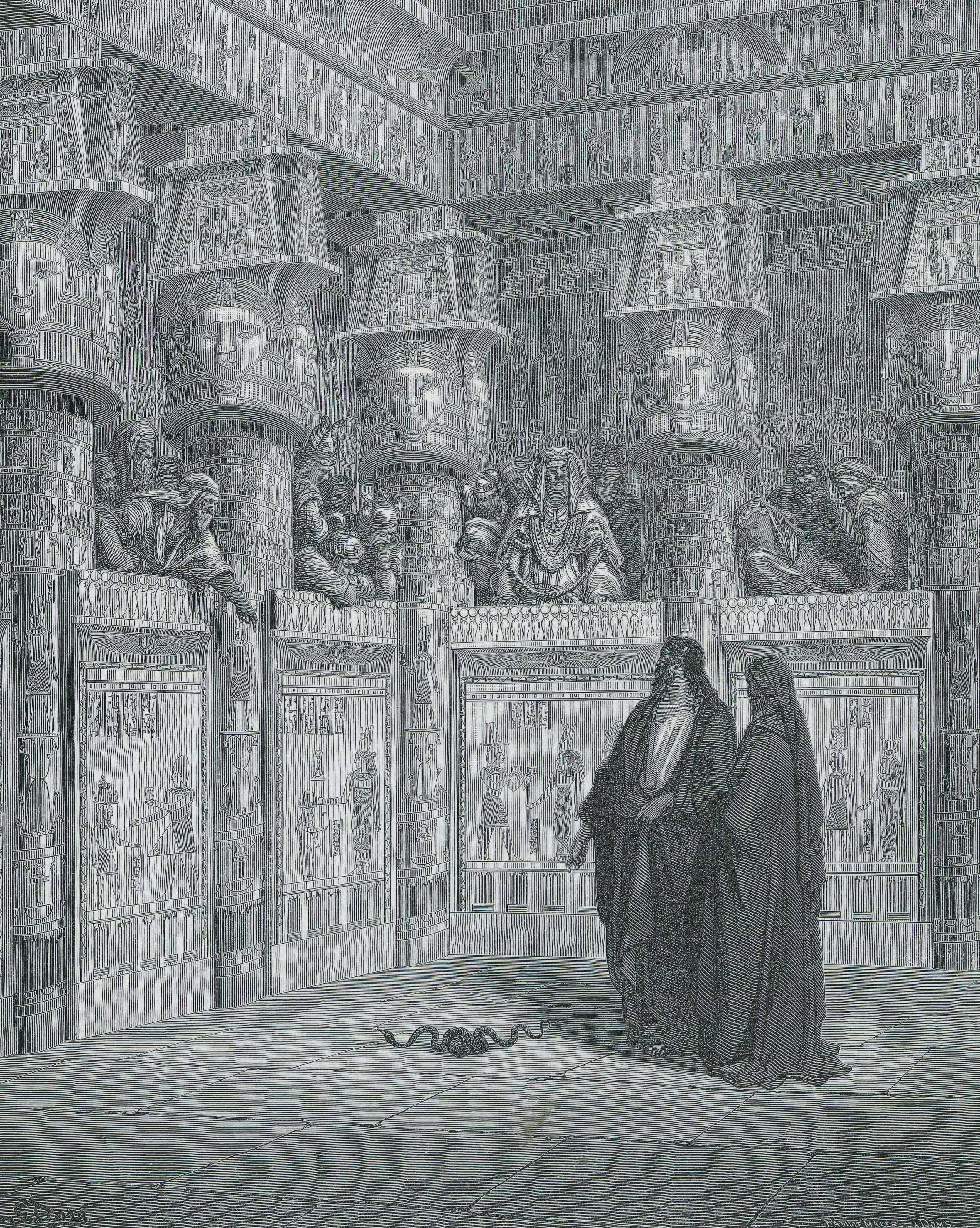
It can be difficult to recognize the Lord’s power in our lives. The Lord selected Moses and Aaron to demonstrate His power before Pharaoh. Pharaoh dismissed the Lord’s power. This prompted additional demonstrations of the Lord’s power through plagues that came upon Egypt. The purpose of this lesson is to help students understand how to recognize the Lord’s power and believe in Him.
Student preparation: Invite students to look for evidence of the Lord’s power in their lives between now and the next class.
Possible Learning Activities
God’s power around us
Consider beginning class by asking the following questions or having students discuss them in groups.
-
On your way to seminary today, what are things you saw, noticed, or observed?
-
On a scale of 1–5 (1 being not at all, 5 being very much), how would you rate your awareness of your surroundings today?
-
What are some reasons we may be more or less observant?
Explain that in a similar way, we can ponder how observant we are to what the Lord has done or is doing for us. Consider asking the following:
-
What evidence might someone notice of God’s power in an ordinary day?
One way to invite the Holy Ghost to teach students individually is by allowing students to privately assess how they feel they are doing with specific gospel principles. You could help them do this by displaying the following:
Rate yourself on a scale of 1–5 (1 being lowest, 5 being highest) on how well the following describes you:
-
I feel confident in my ability to recognize God’s power or influence in my life.
As you learn today, invite the Holy Ghost to help you increase your ability to recognize God’s power and influence in your life.
Believing in the Lord
In Exodus 6–7, the Lord promised Moses that He would bring the Israelites out of bondage. He declared that He would manifest His power to Pharaoh and the Egyptians and that they would have no choice but to set the Israelites free.
Read Exodus 6:7; 7:5, looking for what the Lord would make sure that both the Israelites and the Egyptians would know. Students may want to mark what they find.
-
What would the Israelites and Egyptians come to know because of the manifestations of the Lord’s power?
-
What can we learn about the Lord from these declarations?
Help students identify a truth similar to the Lord gives us opportunities to believe in Him and recognize His power in our lives.
The plagues
The following activity can give students the opportunity to become familiar with some of the Egyptian plagues. It can also help them to see different responses to the manifestations of God’s power. Be cautious to not spend so much time in this section that it would take away from the remainder of the lesson.
Consider displaying the following chart and questions.
In Exodus 7–11, the Lord manifested His power through a series of plagues. Look at the following chart and select two or three plagues to study, looking for answers to the questions that follow.
Some verses say that the Lord hardened Pharaoh’s heart. The Joseph Smith Translation provides important clarification that Pharaoh hardened his own heart (see Joseph Smith Translation, footnotes to Exodus 7:3, 13; 9:12; 10:1, 20, 27; 11:10).
|
Plague |
Verses to study |
|---|---|
Plague 1. Water turned to blood | Verses to study |
Plague 2. Frogs come upon the land | Verses to study Exodus 8:5–15 (Note: “Respite” means rest or relief) |
Plague 3. Lice | Verses to study |
Plague 4. Flies | Verses to study |
Plague 5. Cattle die | Verses to study |
Plague 6. Boils | Verses to study |
Plague 7. Hail and fire from the sky | Verses to study |
Plague 8. Locusts | Verses to study |
Plague 9. Darkness | Verses to study |
-
In what ways was the Lord’s power manifest?
-
Why do you think individuals believed or did not believe in the Lord and His power?
After sufficient time, consider inviting students to share their findings in pairs or small groups.
It may be helpful to clarify some of the following. Students may have noticed that Pharaoh’s magicians, either through deception or the power of the adversary, were able to replicate some portion of the first two plagues. They were not, however, able to fully replicate or stop the plagues. Additionally, the Israelites apparently suffered from some plagues but were protected from the fourth, fifth, and seventh plagues.
If useful, you could encourage students to mark additional phrases in Exodus 8:10, 22; 10:2 where the Lord testified that the people would know He is the Lord.
-
Why do you think the Lord wanted the Egyptians and Israelites to learn about Him?
-
What are reasons people at times believe in God and His power and later have doubts?
The Lord’s power in our lives
It could be helpful to share with students that the Lord’s power is manifest in many ways today. The following could help students think about how they have seen or experienced that power.
Imagine you have a friend who isn’t confident that they have ever had an experience with Heavenly Father or felt His power. As you continue your study, think about what you would say to this person.
It may be helpful to give students time to ponder or write their thoughts on the following question before they share with the class.
-
What are ways you have come to believe in the Lord’s power? Or what are things that could help you believe?
-
What are examples from the scriptures or Church history where people were shown the Lord’s power?
Students might share examples such as feeling comfort or peace from prayer or a priesthood blessing, experiencing forgiveness, feeling personal guidance from the Holy Ghost, and so on.
Help students understand that experiences with the Lord’s power generally result from demonstrating faithful attitudes or actions.
President Russell M. Nelson taught the following about what we can do to invite experiences with Heavenly Father:
Understand that in the absence of experiences with God, one can doubt the existence of God. So, put yourself in a position to begin having experiences with Him. Humble yourself. Pray to have eyes to see God’s hand in your life and in the world around you. Ask Him to tell you if He is really there—if He knows you. Ask Him how He feels about you. And then listen. (“Come, Follow Me,” Ensign or Liahona, May 2019, 90)
-
What could a person do to begin seeing God’s hand and power in their life?
You might invite students to role-play how they could respond to the scenario above. Have them counsel their friend who isn’t confident that they have ever had an experience with the Lord or felt His power.
Consider bearing testimony of Heavenly Father and Jesus Christ and the importance of recognizing Their power in our lives.